
Why So Many People Quit Online Weight Loss Programs (And What They Do Instead)

It usually starts with a photo
Not a terrible one. Just a normal one. A birthday, a casual Sunday, a moment someone captured without warning. You see it and something shifts. You think, "Wait. Is that actually what I look like right now?"
For one of our patients — we'll call her Jessica — that moment came while scrolling through her engagement photos. She was 38, a mom to a six-year-old boy, and getting married for the second time. Her first marriage had ended badly. The years that followed were hard in ways that don't show up on a lab report — a pregnancy, a divorce, the kind of stress that quietly settles into your body and stays there. By the time she found someone worth doing it all over again for, she had also found herself carrying weight she hadn't been able to shake, no matter what she tried.
Her wedding was set for the fall of 2025. She had time — or so she thought. The plan was simple: start early, stay consistent, skip the last-minute panic.
Like most people, her first move was to her phone.
The Algorithm Knew
Within what felt like minutes, an ad appeared. An online weight loss program. Sleek website, reassuring testimonials, a doctor's name somewhere in the fine print. No appointments. No waiting rooms. No explaining yourself to a stranger in a white coat. Just a short intake form, a payment, and semaglutide shipped to her door.
Honestly? It sounded great.
And at first, it was. The scale moved. She told her friends. She felt like she had finally cracked the code.
Then, a few weeks in, things got complicated.
The side effects hit harder than expected. She had real questions about dosing, about what to eat, about why she felt exhausted some days and fine on others. The responses she got back felt like they were written for someone else. Because they probably were. Copy-pasted, templated, designed to check a box and move on to the next person in the queue.
She was paying for a service and feeling completely alone in it. That's a specific kind of frustrating — the kind that makes you question whether the problem is the program or you.
It wasn't her.
Look, We Get the Appeal
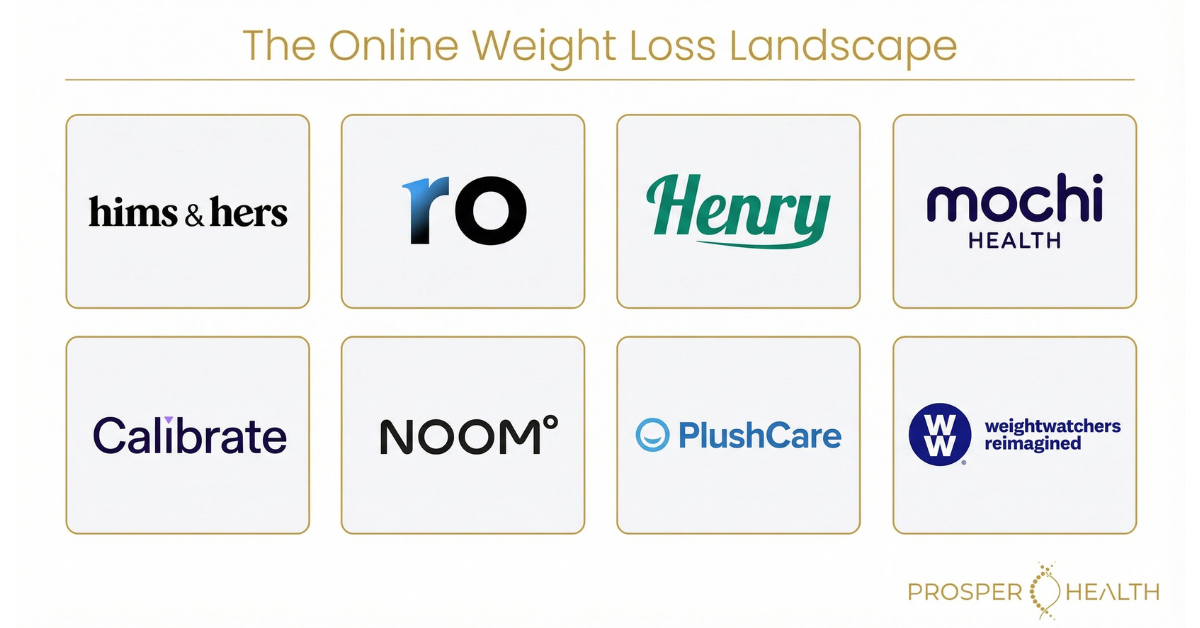
Companies like Hims, Ro, and Henry Meds have done something genuinely useful. They made weight loss medications accessible to people who previously had to jump through a dozen hoops just to have a conversation about them. Lowering barriers to care is a good thing.
For people who respond well and don't need much adjustment along the way, these programs can work just fine. We're not here to trash them.
But "accessible" and "personalized" are not the same thing. And that gap is where a lot of people get lost.
Here's Where It Falls Apart
Weight loss is not a math problem. If it were that simple, nobody would still be struggling with it.
Hormones matter. Metabolic function matters. Sleep, stress, thyroid health, insulin resistance — all of it matters. And all of it changes over time, which means your approach has to change with it.
What happens in most online programs when things get complicated? You submit a message. You wait. You get a response that may or may not apply to your specific situation. You make your best guess.
That's not care. That's a subscription service with a medical veneer.
We see this constantly in patients who come to us after trying these programs. The story is almost always the same: early progress, a plateau, mounting confusion, and eventually a quiet decision to just stop. Sometimes the weight comes back. Sometimes more of it. And now there's a layer of discouragement sitting on top of everything else.
Back to Jessica
By early 2025, she was stuck.
The progress had stalled. The wedding timeline that once felt comfortable was starting to feel tight. Dress fittings were coming up. And instead of feeling good about where she was, she felt like she had wasted months going in circles.
She had the medication. She didn't have a plan. She had made progress. She didn't feel in control of it. She was following instructions. She didn't understand what to actually adjust or why.
So she stopped. And like it so often does, some of what she had worked for started to slip away. What began as a smart, proactive decision had turned into one of the more frustrating experiences of her adult life. She had already been through enough of those.
What Actually Different Looks Like
Frustrated, Jessica started looking for something else. She wasn't interested in another program. She wanted to actually talk to someone.
She found a clinic here in New Jersey that did things differently.
The first thing she noticed was that the process started with a real conversation. Not a dropdown menu. An actual conversation about her life — her schedule, her stress, her sleep, her history, what she had already tried and why it hadn't worked. The fact that she had been through a divorce and a pregnancy and years of just holding it together — all of that was part of the picture.
Then came comprehensive lab work. A thorough look at what was actually happening in her body at a hormonal and metabolic level. Then a plan built around those findings, not around whatever's easiest to automate.
When side effects came up, they were addressed. When her progress slowed, the approach changed. When she had questions, she got answers from someone who knew her case.
This is what we do at Prosper Health. We're not a platform. We're providers. There's a difference, and it's not a small one.
How It Turned Out
The progress came back, and this time it felt different. More stable. More understandable. She knew what was working and why, which meant she could actually trust the process instead of just hoping for the best.
By the time the wedding arrived that fall, she wasn't just lighter. She was clearer. More confident. Not because she had hit some number on a scale, but because she finally felt like she understood her own body.
That's the part the apps don't advertise.
You Made It This Far. That Tells Us Something.
People who skim to the bottom of a blog post are looking for the quick answer. People who read the whole thing are looking for the real one.
You read the whole thing.
That means you've probably been through some version of Jessica's story. Maybe it was a program that worked for a while and then didn't. Maybe it was side effects you couldn't get real answers about. Maybe you're just tired of starting over and want to actually get somewhere this time.
We built Prosper Health for exactly that person.
We're a New Jersey-based team of providers who believe the intake form is where the relationship starts, not where it ends. We do real visits. We look at real labs. We ask the questions that most places skip because they're inconvenient or time-consuming. We build plans that are designed around you — not around whatever's easiest to scale.
Get Started with our intake for form. It takes a few minutes, there's no commitment, and it puts you in front of a real provider who will actually read it. From there, we'll have the kind of conversation you've probably been looking for this whole time.
Your wedding, your reunion, your "I just want to feel like myself again" moment — whatever brought you here, we're glad it did. Let's actually figure this out.
.svg)


.svg)
.svg)
.svg)